




Over 7000 articles written by our authors
 530+
530+
 7000+
7000+
 100000+
 159+
159+

Open to Hope ® is a non-profit with the mission of helping people find hope after loss. We invite you to read, listen and share your stories of hope and compassion.
We have helped over 2,000,000 people in 26 countries find hope after the death of a loved one.
Subscribe
530+
7000+
100000+
159+
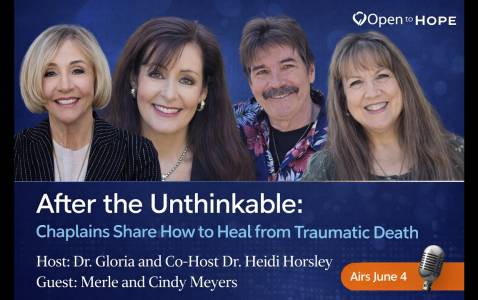
Are you dealing with a traumatic death? Join Dr’s Gloria and Heidi Horsley and their guest Merle and Cindy Myers who have been volunteer Senior Chaplains. They are hosts of the Grief and Trauma Chaplaincy website with free resources for trauma and loss survivors.
Read More
In this episode, Drs. Gloria and Heidi Horsley speak with Allizandra Herberhold, LMSW, about the effects of losing a cousin to suicide. Herberhold is an Interventionist at Parents for Peace, supporting radicalized individuals and families, and leads a peer group for fathers of radicalized children with experience in inpatient and forensic settings.
Read More
Grief Changes You – Awareness Helps You to Rebuild Loss changes you. It’s natural to feel lonely and unsure when someone important is no longer there. When depression that follows loss is part of the picture, everything can feel heavier and harder to move through. For a long time, that weight can feel constant – like you’re moving through fog. Separation can also create a space you don’t recognize, but it can also help you see yourself without old patterns or expectations. That distance can feel uncomfortable at first, but it is often where something begins to shift. You start […]
Read More
It’s Spring and you find yourself watching people around you excitedly making plans for their upcoming summer vacations. Instead, what are you doing? You are thinking about how much you miss your loved one. How long has it been? Bereaved people are often asked this question. I ask it of you, “How long has it been?” Now answer this question: “How long does it feel like it’s been?” A common answer is, “On one hand it feels like yesterday. On the other, it feels like a long time ago.” Why do we experience our lives like this? How can something […]
Read MoreBecome a part of our healing community and find out what’s happening at Open to Hope.
Open to Hope is an online community offering inspirational stories of loss, hope and recovery. We believe hope is the bridge between loss and recovery.


