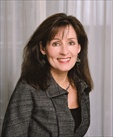
Heidi Horsley
Dr. Heidi Horsley is a licensed psychologist, social worker, and bereaved sibling. She co-hosts the award-winning weekly cable television show and podcast, Open to Hope. Dr. Heidi is an Adjunct Professor at Columbia University, and an award-winning author, who has co-authored eight books, and serves on the United Nations Global Mental Health Task Force. She also serves on the Advisory Boards for the Tragedy Assistance Program, the Elisabeth Kubler-Ross Foundation, and Peace of Mind Afghanistan. She served on the National Board of Directors for The Compassionate Friends, and for 10 yrs. worked on a Columbia University research study looking at traumatic loss over time in families who lost a firefighter in the World Trade Center.

Articles:
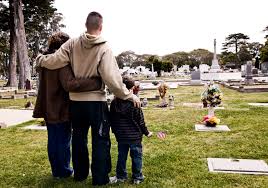
Continuing Bonds After The Loss Of A Parent: Interview with Brittany Trauthwein
At the annual ADEC (Association of Death Education and Counseling), I spoke with Brittany Trauthwein about continuing bonds after loss. Brittany is a doctorate student at the Chicago Professional School of Psychology who is writing a dissertation about continuing bonds after the death of a parent. In the video below, Brittany discusses how she got into this topic and why it was so important for her to write about it as her dissertation. Here are some key takeaways from the video: During the first year of her schooling, Brittany lost her father. That was when people started telling her stories […]
Read More
Art of Grieving, After Loss of Child: Interview With Dr. Delores Gulledge
At the annual ADEC (Association of Death Education and Counseling), I spoke with Dr. Delores Gulledge about life after the death of her 17 year old daughter Melanie. She shares how she went forward with her life and found a way to help others. Delores is also the author of a book called “A Mourning Miracle”, which she wrote while in the process of putting her life back together after the death of her daughter. Her book was written to help others who are going through the same experience. In the video below, Delores share her advice on how to […]
Read More
Giving Back After Coping with a Loss: Interview with Dr.Janna Henning
At the annual ADEC (Association of Death Education and Counseling), I spoke with Dr. Janna Henning about her losses and how she went on to help other people the way she helped herself. Getting into the field of death and dying was influenced by Janna’s own loss experience. At the age of 21, Janna was in a car accident where her best friend died. Six months later, Janna’s partner was killed in a similar accident. For Janna, having those two loss experiences in her 20’s influenced her way of understanding loss. When Janna later entered the field of psychology it […]
Read More
Multiple Sibling Loss: Interview with Shavaun McGinty
At the annual ADEC (Association of Death Education and Counseling), I spoke with Shavaun McGinty, an expert on sibling loss. In the video below I talk to Shavaun about the loss of her three siblings, the effect it has had on her life, and how she went on to find hope after loss. Here are some key takeaways from the video: Shavaun was 25 when she lost her sister, who was 23. Shavaun was 42 when she experienced her most recent sibling loss 4 years ago. Siblings can find hope again by passing on the legacy through talking about your […]
Read More
Litea Williams and Eleanor Haley: What’s Your Grief?
What’s Your Grief? is an organization founded and operated by Litea Williams and Eleanor Haley. “Practical, down to earth tools” is their specialty. They also do a lot of work in Baltimore City, working with the community and in particular with the homeless population. Williams and Haley spoke with Open to Hope’s Executive Director Dr. Heidi Horsley during the Association for Death Education and Counseling 2015 conference about their work and experience with grief therapy. “We’ll be presenting here a little bit about grief below the poverty line,” explains Williams. When a person is homeless and also grieving, it introduces […]
Read More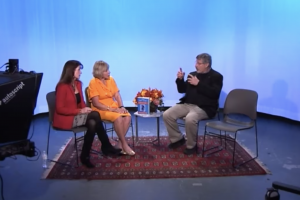
Trauma/Heal The Body
In episode 48, Drs. Gloria and Heidi Horsley interview Dr. Bessel van der Kolk, author of The Body Keeps Score: Brain, Mind and Body in the Healing of Trauma. They also speak with Dr. Lyn Prashant, PhD, who uses yoga and massage in conjunction with her certification in grief counseling to holistically help heal the body after a trauma or loss in her Integrative Grief Therapy practice. Dr. van der Kolk explains that it’s not just fight vs. flight, but also elements of freeze and give up when the body faces a trauma. There comes a point when the body/mind […]
Read More
Reaching Grieving People in Communities of Color
Brianne Overton is a grief counselor in the St. Louis metro area, and recently spoke with Dr. Heidi Horsley at the Association of Death Education and Counseling conference. Overton specializes in working with kids and teens, particularly in marginalized and under-represented demographics. She welcomes patients in her office, but is also very active in community outreach, partnering with a variety of housing organizations and other agencies where she might connect with potential patients. “I call myself a traveling counselor,” she says. “A lot of my clients don’t have a means of traveling to me—I can travel to them.” Dr. Horsley […]
Read More
The Response of Men After a Miscarriage with Stephanie Rose
At the annual ADEC (Association of Death Education and Counseling), I spoke with Stephanie Rose about men and miscarriage and the unacknowledged loss. Men sometimes respond differently to miscarriages. Stephanie explains more about this in the video below. Here are some key takeaways from the video: Stephanie’s research suggests that men can experience an array of emotions after their wife has had a miscarriage, but those emotions often brushed under the rug. When a man’s wife experiences a miscarriage, the man always gets asked “how is your wife doing?” vs. “how are you feeling?” A man’s feelings in this situation […]
Read More
Charlotte Manges: Prenatal Loss
Charlotte Manges was an OB maternity nurse for 20 years, in charge of the pregnancy loss program where mothers were cared for in instances where babies did not survive. Today, she works with Now I Lay Me Down to Sleep and A Walk to Remember. Many of these mothers experienced stillborns and/or premature births. “I felt these mothers and dads were being shortchanged,” she explains. Too often, stillborns and babies who die shortly after birth are seen as specimens to be sent to a lab or are whisked away to the morgue. There were times a mother-to-be would come in […]
Read More
Darcy Harris: Social Justice and Grief
Dr. Darcy Harris has most recently been focusing on working with issues on social justices and social messages as it relates to grieving, she tells Dr. Heidi Horsley during the Association for Death Education and Counseling 2015 conference. Working with a grief and death studies program in London, Ontario, she splits her time between this work and continuing to serve as a therapist. She’s noticed a number of recurring themes arising within her clients and students alike, such as, “Am I normal?” Many times, people in grief feel like they need to constrict and change how they appear to be […]
Read More
Open to Hope is an online community offering inspirational stories of loss, hope and recovery. We believe hope is the bridge between loss and recovery.


