



You are here: Home > Your Loss > Family Loss > Death of a Parent > > Support Groups Can Help Those Bereaved by Suicide

Support Groups Can Help Those Bereaved by Suicide

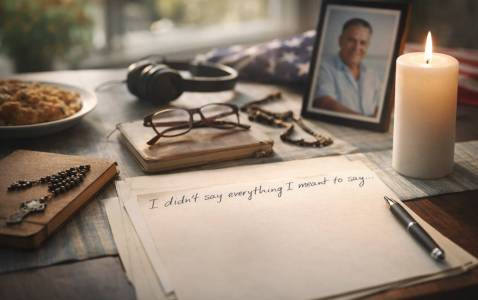
But I didn’t say goodbye! That’s all I could think about when I learned that my dad killed himself.  Friends said that he “was no longer in pain,” and that he loved me. But I didn’t say goodbye and those words weighed heavy on my grieving heart.

Approximately 4.5 million Americans became bereaved by suicide in the last 25 years with 199,800 bereaved added in 2006 (AAS, 2009). Sadly, I became a part of that statistic in 1986 when my father killed himself while I was in the hospital awaiting the birth of my triplets. I personally found that attending a support group with others bereaved by suicide helped me and in 1995, I created and facilitated a group, SOLAS, Sharing Our Loss After Suicide. My goal was to give others bereaved by suicide a place to feel safe and accepted as I focused on their strength, growth and resiliency. The idea of the word SOLAS came from my goal of wanting to bring solace to the bereaved.

Individuals bereaved by suicide view professional help as beneficial and value one-to-one contact with others bereaved by suicide (McMenamy, Jordan, & Mitchell, 2008). Therefore, a group can become a safe place to tell one’s story with those who have experienced similar losses. Attendance in bereavement groups offers a forum to exchange emotions in a non-judgmental setting (McCreight, 2008) and the relationships formed can last a lifetime.

In a review of those bereaved by suicide compared with survivors of other deaths, no significant differences between those bereaved after a suicide and other bereaved groups were found regarding general mental health, depression, PTSD, anxiety, and suicidal behavior (Sveen, & Walby, 2008). However, those bereaved by suicide reported higher levels of rejection, shame, stigma, need to conceal cause, and blaming than survivors of other deaths. Other common grief reactions are guilt and responsibility, searching for an explanation, anxiety, preoccupation with the suicide, and relief. Individuals bereaved by suicide report high levels of distress, depression, guilt, anxiety, and trauma and may find it difficult talking with others about suicide (McMenamy, Jordan & Mitchell, 2008).

Grief reactions after a suicide can be intensely felt. As I was holding my newborn triplets and experiencing the joy in their birth, I realized that my dad would never get to meet them and that influenced my grief reactions. Suicide has been explained as a “death like no other” (Redfield-Jamison, 2006) and the bereaved may have elevated risk for developing complicated mourning (Jordan, et al 2004).  Talking with professionals and support group members can help. Many bereaved after suicide put their confidence and trust into those bereaved by suicide believing that only they can fully understand their particular needs and difficulties (Feigelman & Feigelman, 2006).

A bereavement group is not for everyone. However, if you want to share your pain and talk about your experience, attend a group and see if it is right for you. The group becomes a place where your grief is normalized.

If you are a bereaved parent, you may have an increased likelihood of guilt, remorse, and self-blame if your child had a psychiatric illness, if you had a troubled relationship with your child, and if your child had made previous attempts (Feigelman, Jordan, & Gorman, 2008-2009). A group can give you an opportunity to talk about your child. You can also learn ways to help your grieving children. Dyregrov (2009) studied the need for psychological assistance to cope with suicide among bereaved children. Children reported they found support by speaking with psychologists (52%), teachers (35%), public health nurses (35%), and clergymen (29%).

Sometimes we can feel very much alone in our grief and it takes effort to reach out to others who understand what we are going through. Henri Nouwen says it best, “When we honestly ask ourselves which person in our lives mean the most to us, we often find that it is those who, instead of giving advice, solutions, or cures, have chosen rather to share our pain and touch our wounds with a warm and tender hand.” My hope is that you find those who want to listen to you as you share your pain and heal your heart.

Here are a few resources:

This entry was posted in Death of a Parent, Grief Tips, Special Topics and tagged , , , , by Barbara Rubel. Bookmark the permalink.
Barbara Rubel

About Barbara Rubel

Barbara Rubel is a nationally recognized keynote speaker and trainer in the field of compassion fatigue and being resilient when tragedy strikes. While pregnant with triplets, her father, a retired NYC police officer died by suicide. She is the author of the book, But I Didn’t Say Goodbye: Helping children and families after a suicide. She wrote the 30-hour continuing education course book for nurses: Death, Dying, and Bereavement: Providing compassion during a time of need, sold through Western Schools. She co-authored the Dept. of Justice, Office for Victims of Crime Training Curriculum, Compassion Fatigue with Angie McCown. Barbara wrote a chapter in A Doctor’s Note, In H. Stone. (Ed.), Remembering our Angels. She was featured in the Emmy-winning documentary, Fatal Mistakes, narrated by Marriot Hartley. She was a hospice bereavement counselor, support group facilitator, taught undergraduate and graduate courses at Brooklyn College, City University of NY, and was a consultant with the NJ Attorney General and University of Medicine and Dentistry of NJ to support those impacted by the events of September 11th. She is a consultant with the Department of Justice, Office for Victims of Crime and a bereavement specialist with sharegrief.com, an Internet site. Barbara created the Palette of Grief® Program for coping with traumatic loss and life changing events. She is a Board Certified Expert in Traumatic Stress, Diplomate, American Academy of Experts in Traumatic Stress, Certified Bereavement Specialist and Certified Pastoral Bereavement Counselor with a Certificate of Advanced Study in the Skilled Helper in Bereavement Care Giving. Barbara has keynoted conferences across the United States and is a professional member of the National Speakers Association. To contact Barbara, visit her website at www.griefworkcenter.com. Barbara appeared on the radio show “Healing the Grieving Heart” with Dr. Gloria & Dr. Heidi Horsley

Leave a Reply

Your email address will not be published. Required fields are marked *

*

You may use these HTML tags and attributes: <a href="" title=""> <abbr title=""> <acronym title=""> <b> <blockquote cite=""> <cite> <code> <del datetime=""> <em> <i> <q cite=""> <strike> <strong>